


This article was originally written on December 22, 2025, as an Opinion Piece for the Dallas Morning News.
Dallas-Fort Worth continues to be one of America's fastest-growing metro areas by almost every measure. Fueled by a steady stream of company relocations over a number of years now, our region remains attractive for its abundance of land, energy, housing and talent, especially relative to places like California and New York.
But we are not immune to the massive shift happening now in the economy as a result of artificial intelligence. AI is reshaping entry-level roles across the country, and employers in our region's booming sectors - finance, tech, energy, and aviation - are rightly chasing efficiency in a competitive global market. Yet a growing chorus of voices warns that this rush risks leaving us with a leadership vacuum that no algorithm can fill.
Pope Leo XIV has cautioned that young people, bombarded with instant information, may confuse data for understanding, stunting their moral and intellectual growth. Tech pioneers like Geoffrey Hinton, the "Godfather of AI," have sounded the alarm, highlighting existential risks to humanity that extend far beyond science fiction. And as psychologist Jordan Peterson urges, we must cultivate wisdom proportionate to our tools or face destabilizing consequences.
As local employers automate away rote work, they are discovering that critical operations, from strategic pivots in volatile energy markets to crisis management in aviation, demand leaders with that rare virtue: wisdom. The question for corporate leaders should not be, "How much can AI save us?" but rather, "Who will lead when the algorithms hit their limits?"
The solution lies not in rejecting AI, but in doubling down on education that builds human strengths where machines fall short. A classical liberal arts foundation, still thriving at institutions right here in North Texas, equips graduates to thrive in this AI age. Such an education demands:
- Deep engagement with timeless texts, from Plato to Frederick Douglass, honing the ability to parse nuance and context that AI glosses over.
- Rigorous training in logic, philosophy and ethics, arming students to spot fallacies in data-driven decisions and ask "Should we?" alongside "Can we?"
- Immersion in history and literature, fostering moral imagination to anticipate how today's tech trends echo past disruptions, and how to steer them toward the common good.
- Real-world application through programs like a semester studying in Rome as offered by the University of Dallas, where students confront the roots of Western civilization amid global challenges, or advanced degrees in humanities and business that blend intellectual depth with professional acumen.
This perennially valuable approach to education laid the foundations for our flourishing nation, and yet is now being mistakenly seen as impractical. In point of fact, a classical liberal arts education is the most practical way a person can learn to become the adaptable, discerning leaders major employers need. Graduates from solid liberal arts institutions don't just fill roles, they elevate them, bringing the wisdom to innovate ethically, lead teams confidently through uncertainty and sustain long-term growth.
To our region's business leaders: As you integrate AI for efficiency, invest in talent that ensures it serves human ends. Partner with local universities committed to forming wise professionals. Your bottom line, and our shared prosperity, depend on it.
Because in the AI era, computational power is abundant. But the judgment to wield it well? That's the edge that will keep D-FW leading the nation.

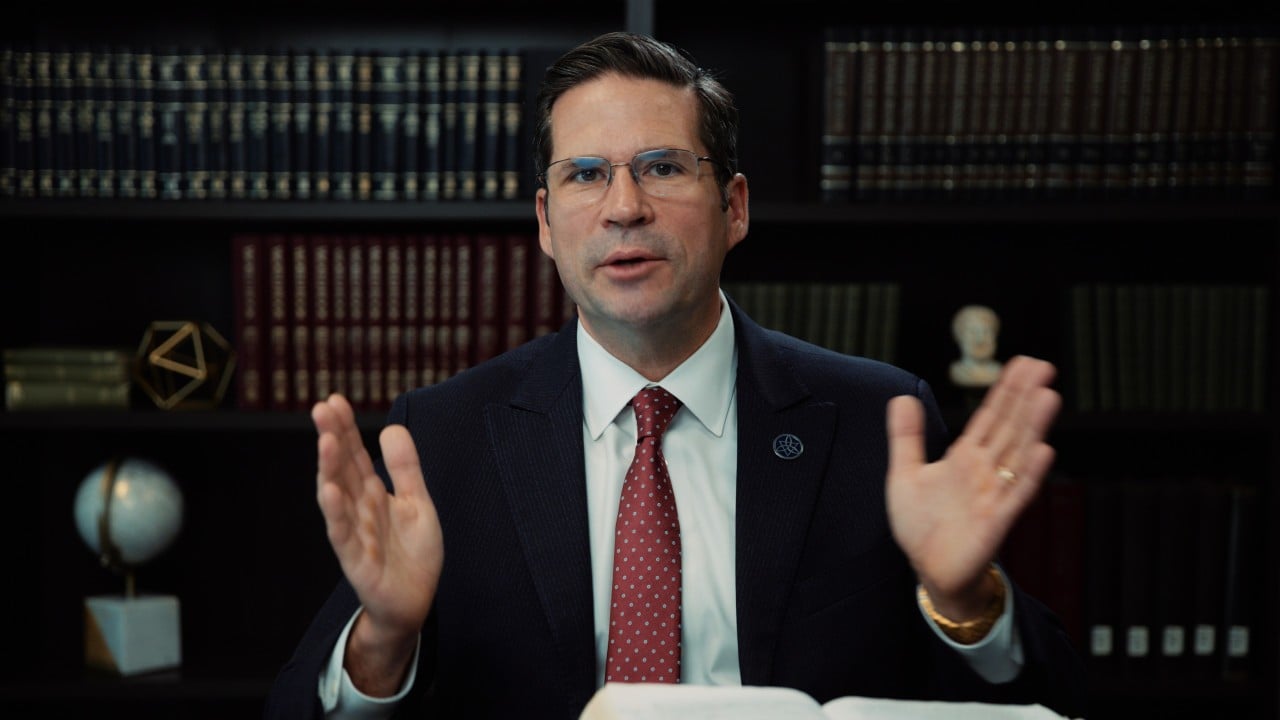
President Jonathan J. Sanford, Ph.D.
Jonathan J. Sanford, PhD, is the 10th president of the University of Dallas and a tenured professor in the Philosophy Department. As president, Dr. Sanford has dedicated his efforts to leading the University of Dallas to more fully realizing its calling as a premier Catholic liberal arts university by means of a thoroughgoing commitment to academic excellence, a distinctive and thoroughly nurturing approach to forming the character of our students, and the cultivation of true magnanimity in service to church and society.





Comments ()